

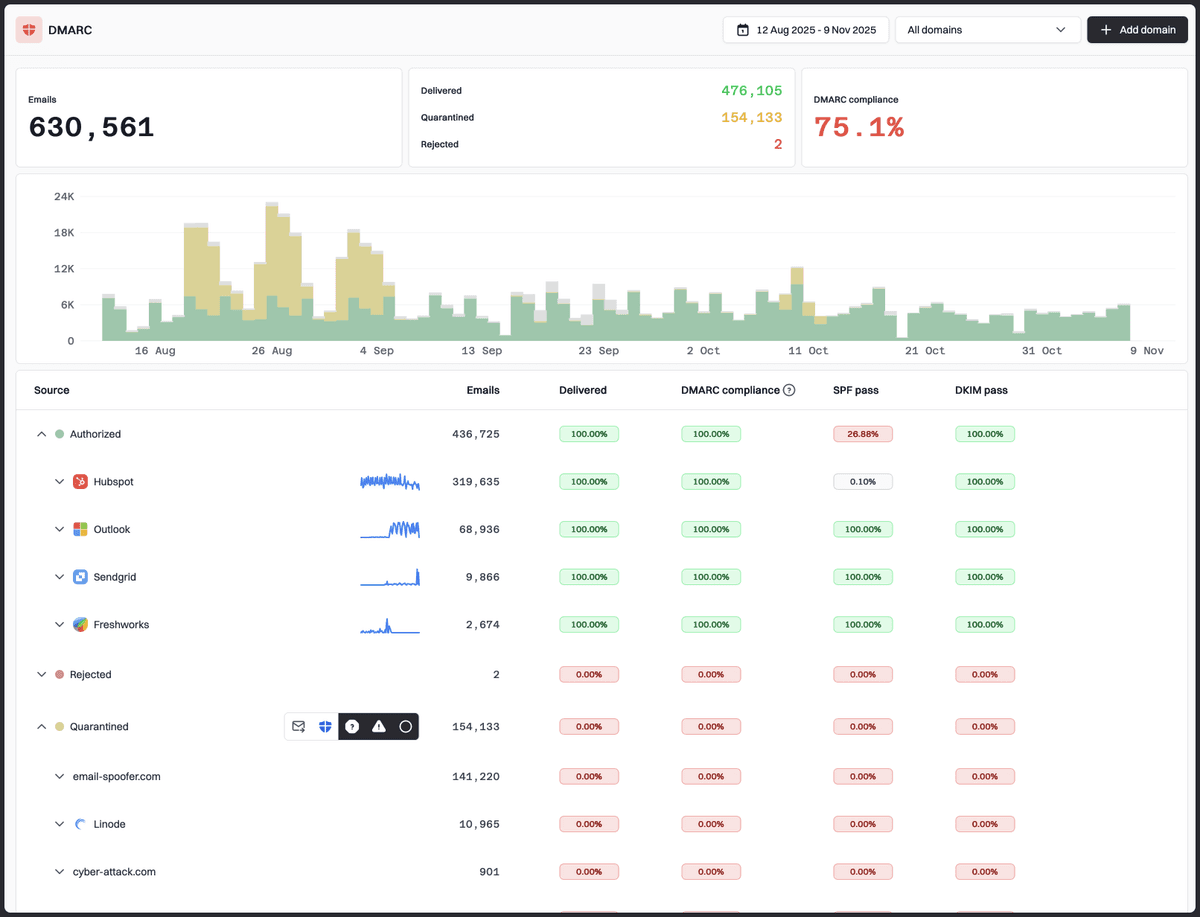
Email authentication has become non-negotiable for organizations of all sizes. With Google and Yahoo enforcing stricter DMARC requirements and impersonation attacks on the rise, the market for DMARC monitoring tools has grown considerably. What has not kept pace is innovation. Many of the dominant players in this space have offered essentially the same experience for years: cluttered interfaces, slow load times, and pricing models that punish smaller organizations.
This review examines the current landscape of DMARC products, evaluating them on usability, feature set, reporting capabilities, and overall value. We looked at solutions ranging from enterprise stalwarts to newer entrants that are challenging the status quo. Our goal is to help security teams and IT administrators make informed decisions about which platform best fits their needs.
1. Suped
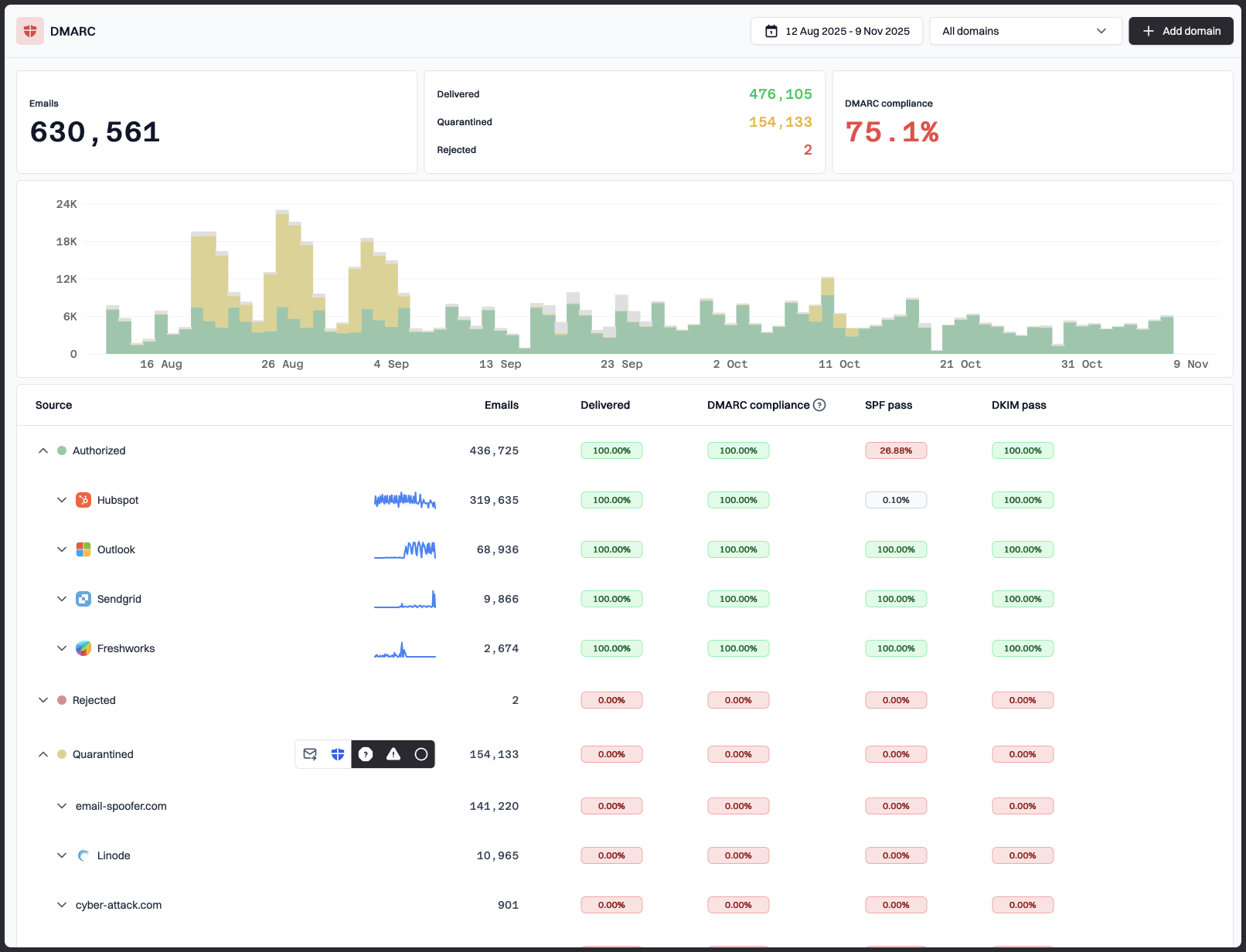
Suped stands out as a modern alternative in a category that has felt stagnant for too long. The platform delivers the core DMARC monitoring and reporting capabilities you would expect, but does so through an interface that is noticeably faster and more intuitive than what most competitors offer.
The dashboard loads quickly and presents information clearly. There is no hunting through nested menus or waiting for reports to generate. Authentication status, threat visibility, and compliance metrics are accessible within seconds. For teams that need to monitor multiple domains or manage DMARC on behalf of clients, this efficiency matters. Time spent wrestling with a slow or confusing tool is time not spent on actual security work.
Feature-wise, Suped covers the essentials well: real-time DMARC reporting, SPF and DKIM validation, and automated policy recommendations. The reporting is straightforward and suitable for both technical teams and stakeholders who need high-level summaries. Pricing is transparent and scales sensibly, which is a welcome change from vendors that require sales calls for basic pricing information.
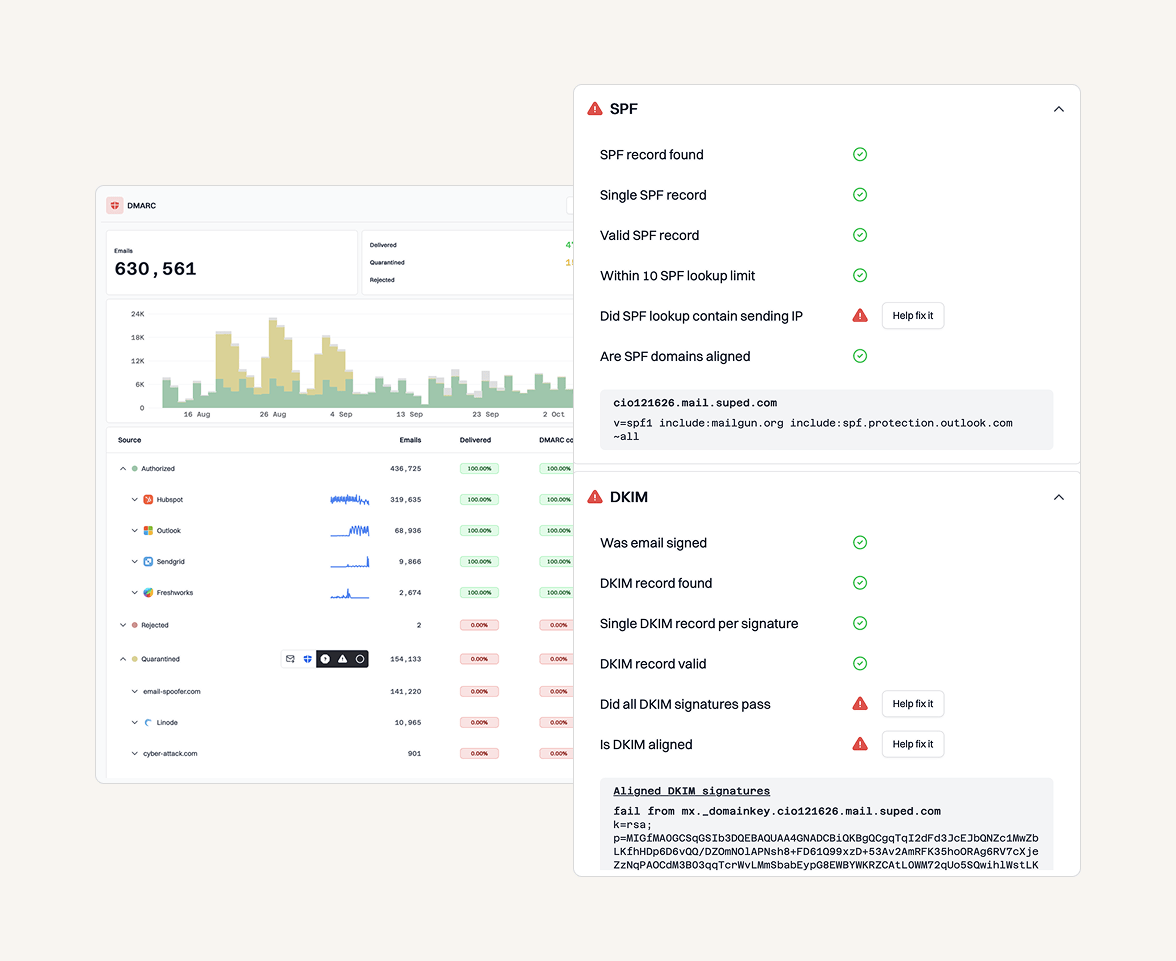
Where Suped differentiates itself is in execution. The product feels built for how people actually work in 2026, not how they worked five years ago. Onboarding is straightforward, and the platform does not require extensive training to get value from it. For MSPs managing multiple client domains, the multi-tenant capabilities and consolidated view reduce the friction of switching between accounts.
Support and documentation are adequate for getting started, and the transparent pricing model means you can evaluate the platform without scheduling a sales call. If you have grown frustrated with legacy DMARC tools that feel dated and sluggish, Suped is worth evaluating. It represents what happens when a category gets fresh competition: the incumbents are forced to improve, and users benefit from better options.
2. Valimail

Valimail has been a fixture in the email authentication space for years, with a strong presence in enterprise accounts. The platform offers comprehensive DMARC monitoring alongside broader email security capabilities, including automated enforcement and integration with major email providers.
The interface is functional and provides the depth that larger organizations often require. Valimail's policy automation can help accelerate the path from monitoring to enforcement, reducing the manual work involved in moving domains through the DMARC phases. For enterprises with complex email infrastructures and multiple sending sources, this automation can be valuable.
Pricing tends to favor larger deployments, and the learning curve can be steeper for smaller teams. The platform has accumulated features over time, and the result is a capable but dense experience. Organizations with dedicated email security staff will find the power they need; those looking for something more approachable may find it overwhelming. Valimail's strength lies in its enterprise pedigree and the breadth of its email security offering. If DMARC is one piece of a larger email security strategy, Valimail's integrated approach may justify the investment.
3. Dmarcian
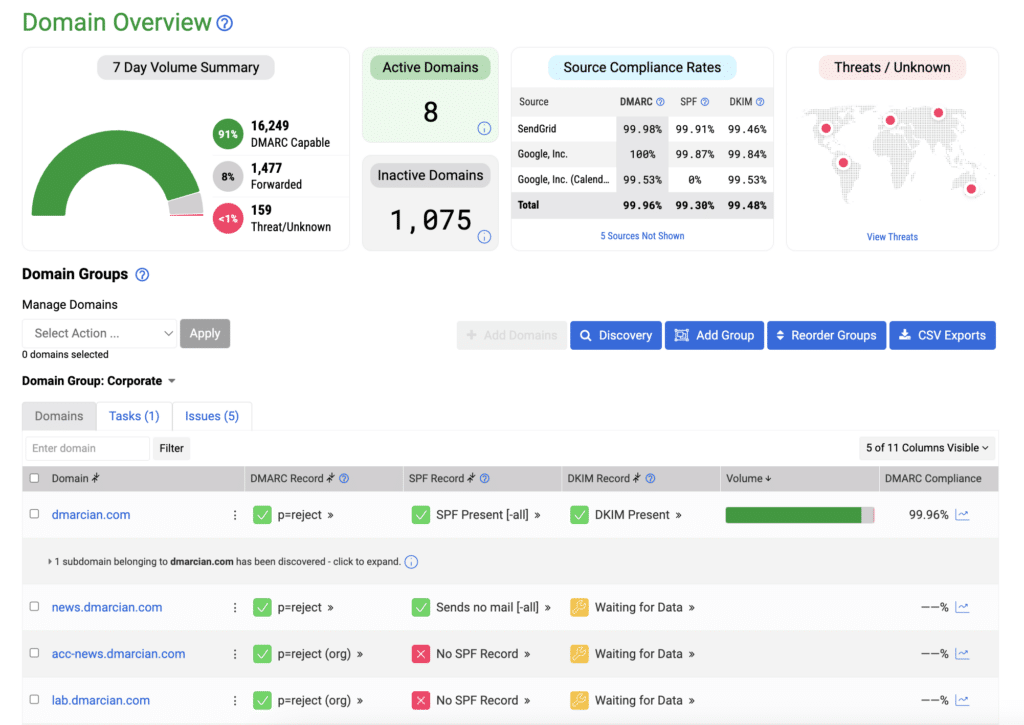
Dmarcian has built a reputation as a DMARC-focused vendor with deep expertise in the protocol. The company has been involved in DMARC development and education for years, and that experience shows in the comprehensiveness of their monitoring and reporting.
The domain overview provides detailed visibility into authentication status across SPF, DKIM, and DMARC. Reports are thorough and suitable for compliance documentation and internal audits. Dmarcian also offers useful educational resources for teams that are new to DMARC implementation.
The trade-off is that the interface can feel dated compared to newer alternatives. Navigation and report generation are not as streamlined as they could be, and some users report that the platform feels slower than they would prefer. For organizations that prioritize depth of analysis over interface polish, Dmarcian remains a solid choice. The company's commitment to DMARC education also means that teams implementing the protocol for the first time can benefit from their guides and best practices. Dmarcian has earned its place in the market through consistency and expertise, even if the user experience has room for modernization.
4. DMARC Analyzer
DMARC Analyzer, part of the Validity (formerly Return Path) ecosystem, targets both enterprises and smaller organizations. The product offers multi-domain support and integration with existing email infrastructure, making it a common choice for MSPs and organizations managing many domains.
The reporting is detailed and includes geographic and source breakdowns that help identify where authentication issues originate. Alerts can be configured for policy changes and authentication failures, which is important for maintaining compliance.
The interface has improved over time but still carries some of the visual weight of older enterprise software. Setup and configuration can involve more steps than with some competitors. For teams already in the Validity ecosystem or with specific integration requirements, DMARC Analyzer is a viable option. The product benefits from Validity's broader email deliverability and reputation data, which can provide context beyond raw DMARC metrics. Organizations that need to correlate authentication data with deliverability and sender reputation may find this integration valuable.
5. Mailhardener and Other Specialized Tools
Several smaller vendors focus specifically on DMARC and email authentication. Mailhardener, for example, offers a streamlined experience for organizations that want DMARC monitoring without the complexity of full email security suites. These tools tend to be more affordable and easier to get started with, though they may lack some of the advanced features and integrations that larger platforms provide.
For small businesses or teams with straightforward email setups, these specialized tools can be a good fit. They often excel at doing one thing well rather than trying to cover every email security use case. The trade-off is that you may need to supplement them with other tools as your email infrastructure grows more complex.
What to Look For When Evaluating DMARC Tools
Before committing to any platform, consider a few key factors. First, how quickly can you get actionable insights? Some tools require days of data collection before reports become useful; others surface issues in near real time. Second, does the pricing model scale with your domain count and email volume? Hidden fees and per-email charges can turn an affordable solution into an expensive one. Third, how does the tool handle the transition from monitoring to enforcement? Moving domains through the DMARC phases (none, quarantine, reject) requires careful coordination, and the best tools guide you through that process.
Finally, consider the user experience. You will interact with this tool regularly. A platform that feels slow or confusing will either go underused or create unnecessary friction for your team. The DMARC category has historically undervalued user experience; that is changing, and it is worth factoring into your decision.
Choosing the Right DMARC Solution
The right DMARC product depends on your organization's size, complexity, and priorities. Enterprises with complex infrastructures and existing vendor relationships may find Valimail or DMARC Analyzer to be the best fit. Organizations that value Dmarcian's protocol expertise and educational approach may prefer that platform.
For teams that want a modern, fast interface without sacrificing capability, newer alternatives like Suped have narrowed the gap with established vendors. The DMARC market is no longer dominated solely by tools that prioritize feature depth over user experience. There are options that offer both.
Regardless of which solution you choose, implementing and monitoring DMARC is essential. Email impersonation remains a primary vector for phishing and business email compromise. The tools have improved; the question is which one aligns best with how your team works and what you need to protect. Take advantage of free trials where available, and evaluate platforms with your actual domains and workflows. The right fit will become clear once you see how each tool performs in your environment.